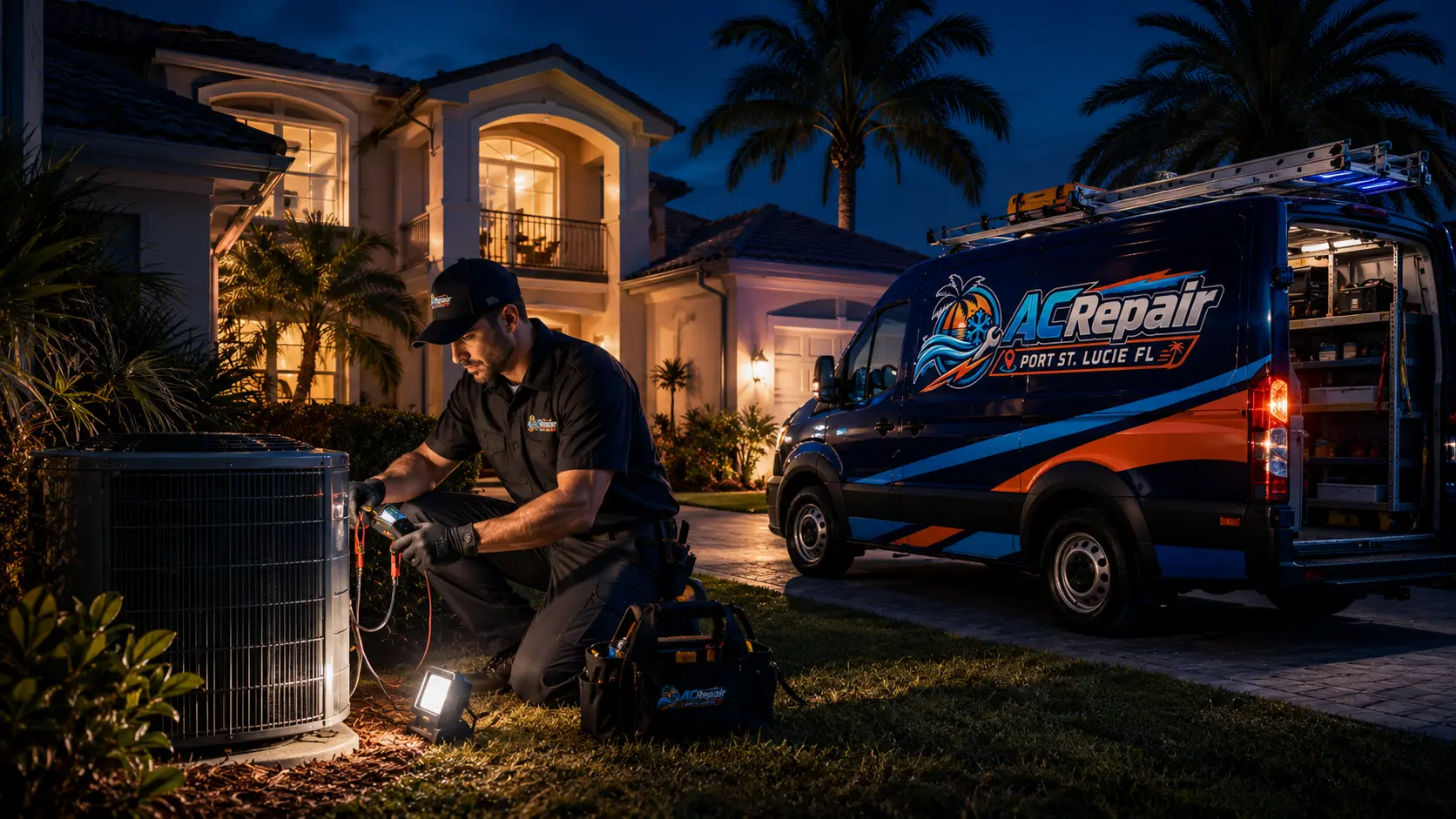
Sandpiper Bay occupies the southeastern part of Port St. Lucie along the St. Lucie River, an established area with mature landscaping, waterfront and near-waterfront properties, and a long-standing resort presence.
Homes close to the water in this part of the city deal with two environmental pressures at once: sustained humidity and salt-influenced air. Together they affect both how hard a system has to work and how quickly its outdoor components deteriorate.
Mature landscaping is the other defining feature. Established trees and hedges provide welcome shade for the building, and they also drop leaves, seeds, and pollen into condenser coils and grow steadily into the clearance those units need.
Salt air and condenser condition
Corrosion in a condenser coil begins at the fin surface and works inward. Because the coil is the point where heat leaves the system, a corroded and fouled coil raises operating pressures and temperatures across the whole refrigeration circuit, which stresses the compressor and shortens capacitor life.
Corroded electrical terminals cause a parallel problem on the control side, creating resistance that generates heat at connections. Both conditions are progressive, and both are easier to slow with routine cleaning and inspection than to reverse.
AC problems worth watching for in this area
In Sandpiper Bay, the environment can influence cooling issues more than the housing type does.
AC problems worth watching for
•Slow refrigerant loss traced to corrosion in outdoor coils
•Condenser coils packed with organic debris from mature landscaping
•Persistent indoor humidity even when temperature is being maintained
•Condensate drain restrictions and biological growth in drain pans
•Electrical components failing early in a corrosive outdoor environment
Landscaping and airflow clearance
Condensers need unobstructed airflow into the coil on all sides and clear discharge above. Hedges planted for screening frequently end up too close, decorative covers restrict flow, and accumulated leaf litter builds up against the base of the cabinet where it is easy to overlook.
Clearing that space and keeping the fin pack rinsed is low-effort maintenance that directly reduces operating pressures on hot days.
Requesting service in Sandpiper Bay
If the complaint involves humidity rather than temperature, or if the outdoor unit is close to the water, mentioning that when you call helps focus the visit on the conditions most likely responsible.
How often should I rinse my outdoor coil near the water?
More often than an inland installation would need. A gentle rinse with plain water, with power off, several times through the cooling season helps remove salt residue and debris before it packs into the fins.
Can corrosion cause a refrigerant leak?
Yes. Corrosion of coil tubing is a recognized source of slow leaks, and it is one reason coastal systems sometimes lose charge gradually without any obvious damage.
Should I cover my condenser when it is not in use?
Full covers can trap moisture against the cabinet and encourage corrosion, and in a climate where cooling is used most of the year the unit is rarely idle for long. Keeping the coil clean is generally more useful than covering it.
Need AC repair in Sandpiper Bay?
Call 772-946-1295 to describe what your system is doing, or send a service request and we will follow up to arrange a visit.