River Park lies in the northeastern part of the Port St. Lucie area near the North Fork of the St. Lucie River, and it is among the oldest developed neighborhoods in this part of St. Lucie County.
Older housing changes the cooling conversation. Homes here were often built before current insulation and duct standards, and many have had their air conditioning equipment replaced several times while the distribution system underneath stayed largely the same.
Proximity to the river adds humidity and, in places, salt-influenced air. Both affect equipment: humidity increases the moisture load a system has to remove, and corrosive air shortens the life of outdoor coils and electrical connections.
Humidity load in a riverside neighborhood
Air conditioning does two jobs at once — lowering temperature and removing moisture. Near the water, the moisture half of that workload is heavier, and a system that is marginally undersized or short on runtime can hold temperature while leaving the house feeling damp.
Symptoms of a humidity problem differ from a temperature problem: clammy air at setpoint, condensation on windows or vents, musty odours, and doors that stick. Those are worth describing specifically rather than reporting simply as poor cooling.
Issues that come with older homes and older ducts
Where the building and the distribution system predate current practice, several conditions recur.
Common in older River Park homes
•Duct systems that leak into attics or crawl spaces, wasting conditioned air
•Undersized return paths that starve the blower and reduce capacity
•Modern equipment installed on distribution designed for older systems
•Corrosion at outdoor coils and electrical terminals in humid, salt-influenced air
•Condensate drainage routed by earlier work without adequate slope or trapping
Coastal air and outdoor equipment
Salt aerosol accelerates corrosion on aluminium fins, copper tubing, and electrical contacts. On the refrigeration side, corroded condenser coils are a recognized source of slow refrigerant leaks; on the electrical side, corroded terminals create resistance, heat, and eventual failure.
Regular rinsing of the condenser coil with plain water, done gently and with power off, is one of the few maintenance actions a homeowner can perform that measurably helps in this environment.
Requesting service in River Park
Because equipment and ductwork here can differ substantially from house to house, describing the age of the home, the age of the equipment if known, and whether the complaint is about temperature or humidity gives the most useful starting point.
The house reaches its setpoint but still feels damp. What causes that?
High indoor humidity relative to temperature. Contributing factors include short cycling, oversized equipment, continuous fan operation, duct leakage drawing in humid air, and infiltration through the building envelope.
Does living near the water shorten AC life?
Salt-influenced air is corrosive to outdoor coils and electrical connections, so equipment in coastal environments can face conditions that inland equipment does not. Rinsing coils and inspecting connections help.
We replaced the air conditioner but comfort barely improved. Why?
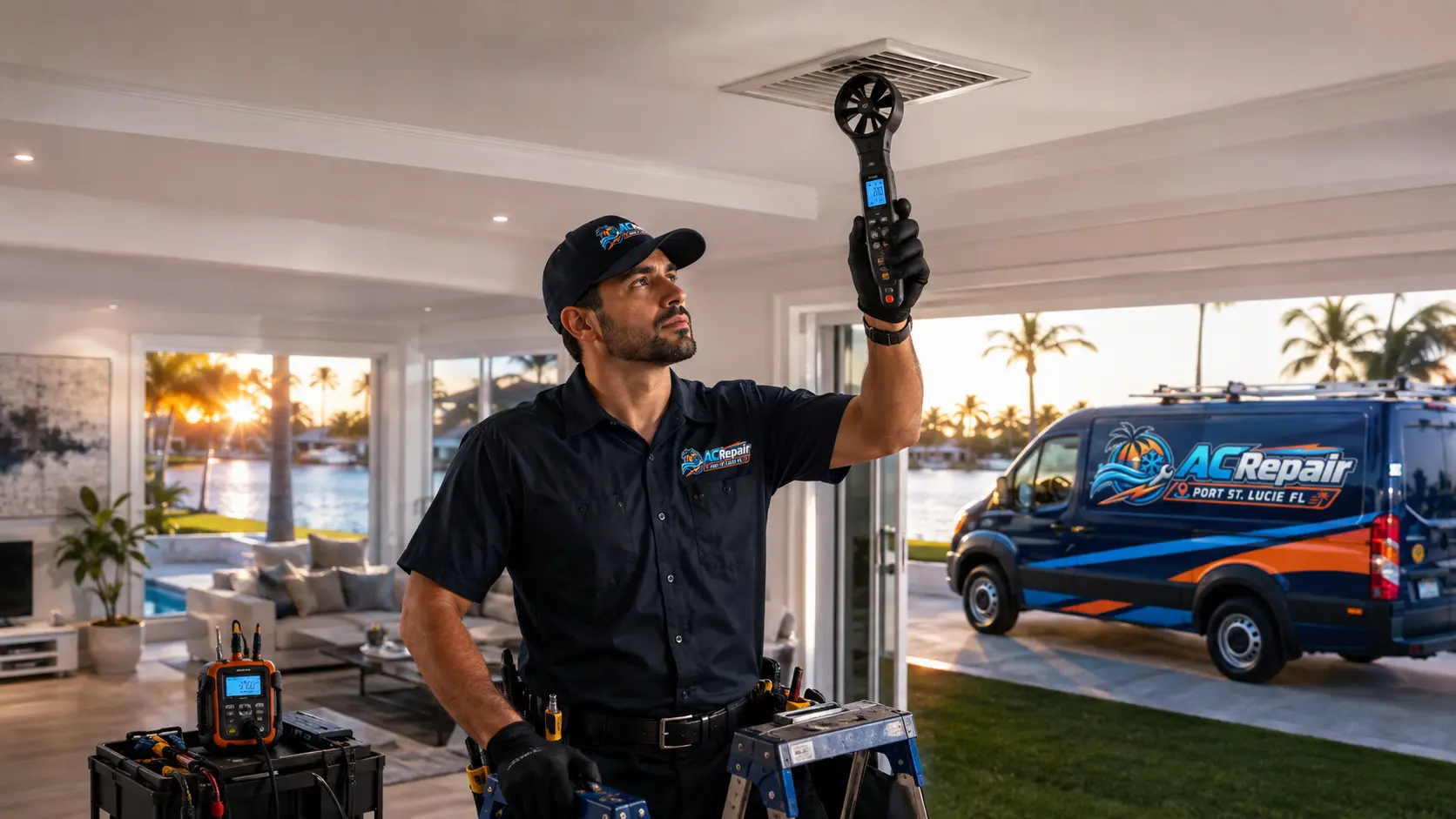
New equipment cannot compensate for a distribution system that leaks or restricts airflow. Measuring airflow and static pressure usually reveals whether the ducts are the limiting factor.
Need AC repair in River Park?
Call 772-946-1295 to describe what your system is doing, or send a service request and we will follow up to arrange a visit.