Air conditioning problems in Port St. Lucie rarely arrive at a convenient moment. This page explains how residential cooling systems fail, what a professional diagnostic visit typically involves, and how to describe the symptom clearly when you call.
A residential air conditioner is a single system made of several cooperating parts: a thermostat that sends the call for cooling, low-voltage controls that relay it, an indoor blower that moves air across a cold evaporator coil, a sealed refrigeration circuit that carries heat outdoors, and an outdoor condenser with a compressor and fan that reject that heat to the air. When any one of those links weakens, the symptom a homeowner notices — warm air, weak airflow, water, noise, or nothing at all — is usually several steps removed from the actual fault.
That is the reason a careful diagnosis matters more than a guess. Two homes can report identical symptoms and have completely different failures behind them. AC repair, done properly, means measuring the system's behavior rather than replacing the part that fails most often and hoping the complaint disappears.
Symptoms that usually indicate an AC repair is needed
Some cooling complaints build slowly over a season and others appear overnight. Both are worth investigating, because a system that is struggling generally consumes more electricity and puts more stress on its remaining components than one operating correctly.
Common reasons homeowners request AC repair
•Air from the supply vents feels close to room temperature
•The system runs for very long periods without reaching the thermostat setting
•Airflow is noticeably weaker than it used to be
•The outdoor unit hums, clicks, or does nothing when cooling is called for
•Ice appears on the copper suction line or on the indoor coil
•Water collects near the air handler or stains a ceiling below an attic unit
•Indoor humidity stays high even while the system runs
•Buzzing, rattling, screeching, or grinding noises accompany operation
The main failure categories behind most cooling complaints
Most residential AC faults fall into one of four families. Electrical faults include failed capacitors, pitted contactors, burnt low-voltage wiring, tripped safety switches, and failed control boards. Airflow faults include clogged filters, dirty evaporator coils, restricted or leaking ductwork, and blower motors that no longer move rated air.
Refrigeration faults include leaks in the sealed circuit, restrictions such as a failing metering device, and non-condensable contamination. Mechanical faults include worn fan motor bearings, damaged fan blades, and compressors with internal wear. A single visible symptom, such as a system that will not cool, can originate in any of the four.
What a professional AC diagnosis may examine
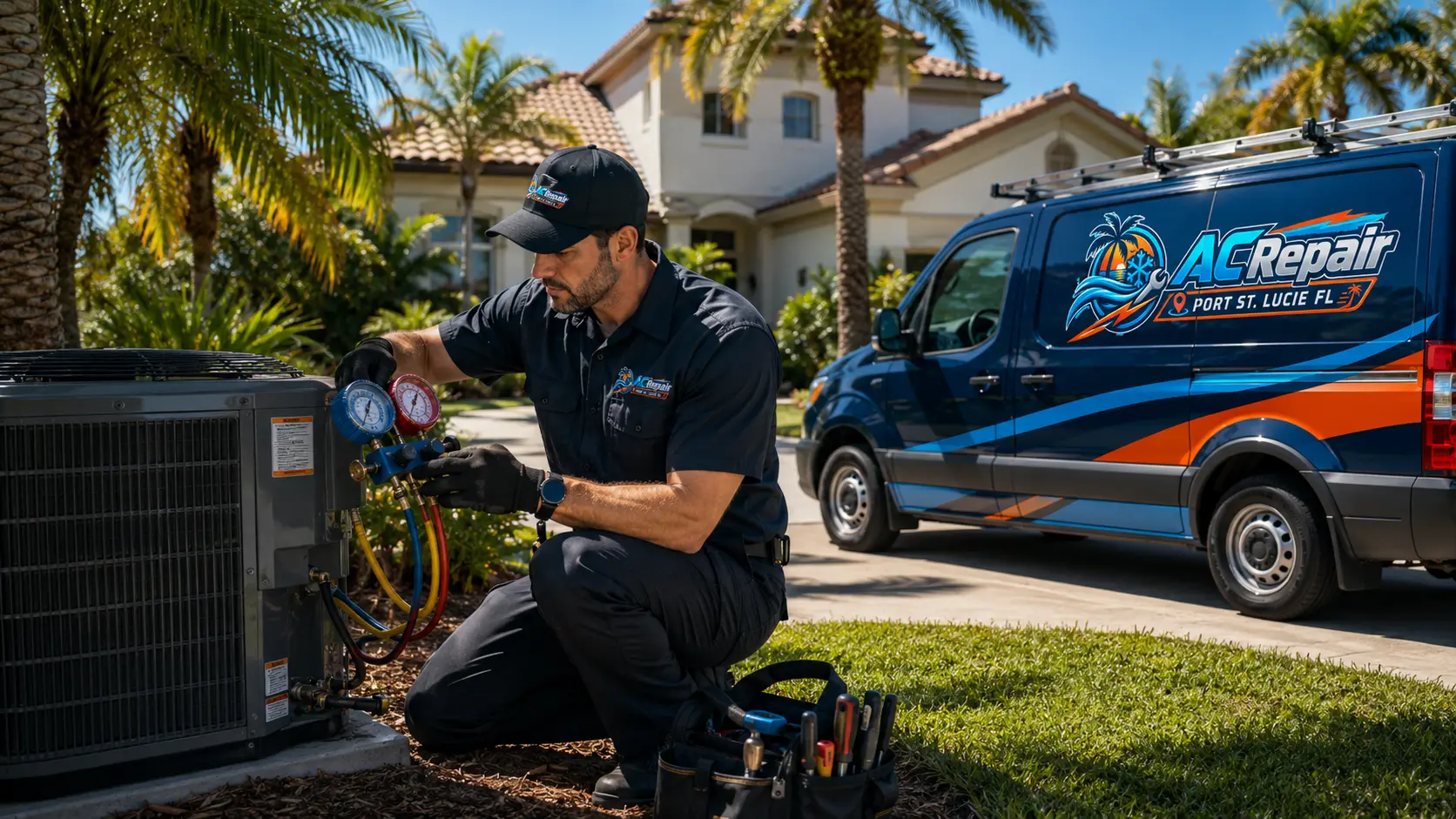
A structured diagnosis typically starts at the control side and works outward, because a thermostat, float switch, or low-voltage break can silence a perfectly healthy system. From there, a technician usually verifies line voltage and control voltage at the equipment, measures the capacitor against its rated microfarad value, and inspects the contactor and wiring for heat damage.
Airflow is then confirmed — filter condition, blower operation, coil cleanliness, and static pressure across the system. Only with airflow established do refrigeration measurements mean anything: suction and liquid pressures, superheat and subcooling, and the temperature difference between return and supply air. Amp draw on the compressor and fan motors rounds out the picture.
Why the obvious part is not always the failed part
A condenser fan that will not spin can be a failed motor or a failed capacitor. A compressor that hums and stops can be an electrical supply problem rather than an internal fault. A coil that freezes can point to airflow restriction or to a refrigerant leak. A system that short-cycles can be responding to a thermostat placement problem, an oversized unit, an electrical fault, or a safety switch doing its job.
Because of that overlap, replacing a major component before the cheaper possibilities have been measured is a common source of unnecessary expense. Testing costs less than parts.
Repair or replacement: how the decision is usually framed
Equipment age, refrigerant type, warranty status, the cost of the failed component, and the condition of the rest of the system all feed the decision. A minor electrical repair on a mid-life system is straightforward. A major sealed-system or compressor repair on an older unit that uses a phased-out refrigerant deserves a side-by-side comparison against replacement before anyone commits.
Requesting both figures in writing, along with the expected remaining life of the repaired system, generally produces a clearer decision than a verbal recommendation alone.
Port St. Lucie's climate context
South Florida's cooling season is long and humid. Equipment here accumulates far more annual runtime than the same equipment installed in a northern climate, and it also does more latent work — removing moisture from the air, not only lowering its temperature. Long runtime accelerates wear on capacitors, contactors, and motor bearings, while heavy condensate production makes drain-line maintenance a routine concern rather than an occasional one.
Homes closer to the water also expose outdoor coils and electrical connections to salt-laden air, which can shorten the service life of a condenser relative to inland installations.
What you can safely check yourself
✓Check whether the thermostat display is on and set to cool with a temperature below room temperature
✓Look at the air filter and note how dirty it is and when it was last changed
✓Feel the air at a supply vent and compare it with the air at the return grille
✓Look at the outdoor unit and note whether the fan is spinning, the unit is humming, or nothing is happening
✓Check whether the breaker for the air handler or condenser has tripped
✓Look for ice on the copper lines and for standing water near the indoor unit
Leave these to a qualified technician
✕Opening the electrical compartment of a condenser — capacitors can hold a dangerous charge after power is removed
✕Adding refrigerant, which is regulated work and does not address the leak that caused the loss
✕Forcing a stalled fan blade to spin
✕Running a system that is visibly frozen or repeatedly tripping a breaker
How long does an AC diagnostic visit usually take?
A straightforward electrical or airflow diagnosis is often completed within an hour. Intermittent faults, suspected refrigerant leaks, and duct-related complaints take longer because the system has to be observed under load rather than tested once.
Does a higher electric bill mean my AC needs repair?
Not always — rates, weather, and occupancy change consumption too. But a system with reduced capacity runs longer to reach the same temperature, so a bill that climbs while comfort declines is a reasonable reason to have the system measured.
Can I keep running the system until a technician arrives?
If it is cooling at all and nothing is frozen, smoking, or tripping a breaker, running it is generally fine. Turn it off if you see ice, smell burning, or hear grinding, since continued operation in those conditions can cause additional damage.
What information helps most when I call?
The symptom in plain words, when it started, whether it is constant or intermittent, the approximate age of the equipment, and anything you have already checked such as the filter, thermostat, and breakers.
Is annual maintenance the same as a repair visit?
No. Maintenance is preventive work on a functioning system — cleaning, drain service, and measurement. A repair visit begins with diagnosing a specific reported fault.
Need help with ac repair in Port St. Lucie?
Call 772-946-1295 to describe what your system is doing, or send a service request and we will follow up to arrange a visit.