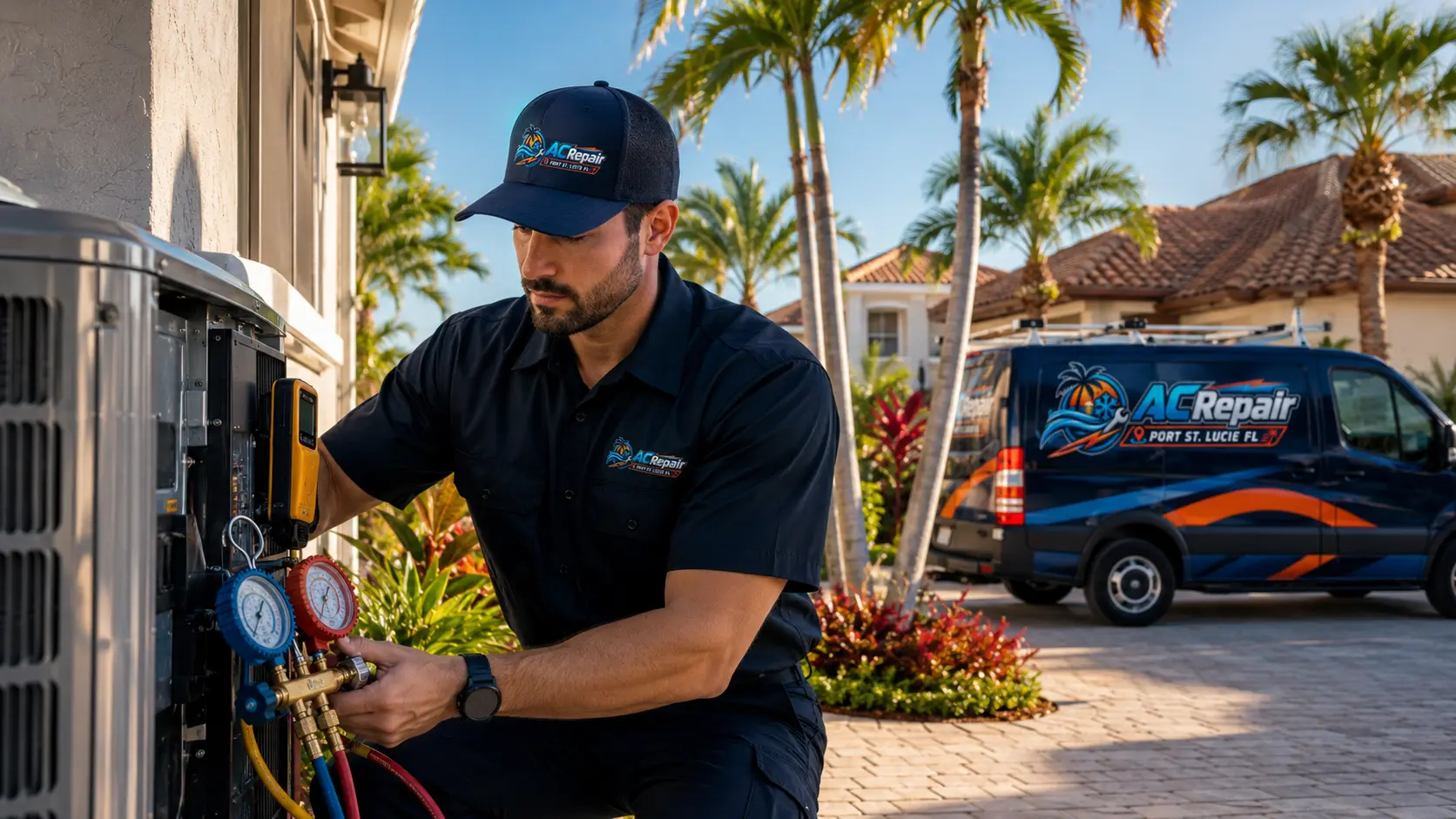
Refrigerant is not a consumable. It circulates in a sealed loop and stays there for the life of the equipment unless something breaches that loop. A system that is low on charge has a leak, and locating it is the actual repair work.
Because charge loss is usually gradual, refrigerant leaks tend to present as cooling that quietly gets worse across a season rather than as a sudden breakdown. Homeowners often adapt to it — lowering the thermostat, adding fans — before recognizing it as a fault.
Simply adding refrigerant without addressing the breach returns the system to the same condition it was in before, on a timeline set by the size of the leak. It also releases regulated refrigerant into the atmosphere and can mask a developing problem that will eventually reach the compressor.
Signs that point toward a refrigerant leak
No single symptom confirms a leak, but several together make it a strong candidate for investigation.
Patterns commonly associated with charge loss
•Cooling capacity that has declined steadily over weeks or months
•Ice forming on the suction line or evaporator coil during operation
•Longer and longer run times to reach the same setpoint
•Hissing or intermittent bubbling near the indoor coil or line set
•Oily residue on service fittings, brazed joints, or coil surfaces
•A system that was topped up in a previous season and has degraded again
Where leaks typically develop
Evaporator coils are a frequent origin, particularly formicary corrosion, which produces microscopic pinholes in copper tubing over years of exposure to indoor air contaminants. Condenser coils in coastal environments corrode from the outside in as salt aerosol settles into the fin pack.
Other common locations include brazed joints, service valve cores and caps, vibration-fatigued suction lines, and line-set penetrations where copper rubs against a structural surface. Accessible joint leaks are generally the most straightforward to repair; coil leaks often are not.
How a leak is located
Leak location is a methodical process. Electronic detectors sweep suspected areas, bubble solution confirms candidate joints, and ultraviolet dye circulated through the system reveals slow leaks that are difficult to catch in a single visit.
Where the leak cannot be found under normal operation, a nitrogen pressure test isolates sections of the circuit and identifies which one loses pressure. Very small leaks sometimes require a return visit after a dye has had time to travel, which is a normal part of the process rather than an inconclusive result.
Repairing versus replacing a leaking component
A leak at an accessible joint or valve can often be repaired directly. A coil riddled with corrosion pinholes usually cannot be reliably sealed, because sealing one pinhole does nothing about the ones forming next to it, and coil replacement becomes the durable option.
Sealant additives marketed as leak stops are viewed cautiously in the trade, since they can interfere with metering devices and complicate future service work on the sealed system.
Evacuation and recharging after the repair
Once the circuit is sealed, the repair is not finished. Air and moisture that entered during the leak or the repair must be removed by pulling a deep vacuum, because moisture inside a refrigeration circuit forms acids that attack the compressor over time.
The system is then charged by weight to the manufacturer's specification and verified with superheat or subcooling measurements appropriate to the metering device. Charging by pressure alone, without those measurements, is a common source of systems that remain slightly off after service.
Older systems and phased-out refrigerants
Equipment using refrigerants that are no longer produced faces a supply-driven cost problem. When a major leak appears in one of those systems, the comparison between repairing and replacing shifts, because the refrigerant itself may represent a significant share of the repair.
Newer equipment also uses refrigerants with different pressure characteristics, so a like-for-like conversion is generally not possible. This is worth understanding before deciding how much to invest in an aging unit.
What you can safely check yourself
✓Note when cooling performance first began to decline
✓Look for oily film around visible copper joints and service caps
✓Check whether the insulated suction line frosts during operation
✓Locate the equipment data plate and note the refrigerant type listed
✓Note whether refrigerant has been added to this system before
Leave these to a qualified technician
✕Adding refrigerant yourself — handling it is regulated and requires certification
✕Using aerosol leak-sealant products
✕Removing service valve caps and depressing the schrader core
✕Running the system continuously while it is frosting
Common residential refrigerants are low in toxicity in ventilated spaces, so the primary concerns are equipment damage and lost capacity rather than health. Poor ventilation and large releases are a different situation and should be treated seriously.
How fast does a leaking system lose its charge?
It depends entirely on the size of the breach. A pinhole may take a full season to become noticeable, while a failed joint can empty a system in hours.
Can a leak be repaired without replacing the coil?
Sometimes. Joint, valve, and line-set leaks are often repairable. Widespread corrosion pinholes across a coil generally are not, because the underlying condition affects the whole component.
Why is a vacuum needed after the repair?
Moisture in a sealed system combines with refrigerant and oil to form acids that degrade internal components. Evacuation removes that moisture along with non-condensable air before the system is charged.
Will my cooling improve immediately after a proper recharge?
If the leak was the limiting factor and the rest of the system is sound, capacity typically returns once the correct charge is in place and verified by measurement.
Need help with refrigerant leak repair in Port St. Lucie?
Call 772-946-1295 to describe what your system is doing, or send a service request and we will follow up to arrange a visit.