The compressor is the most expensive single component in a residential air conditioner, and it is also the component most often blamed for failures that originate elsewhere. Before a compressor is condemned, the electrical parts that start and run it need to be measured.
A compressor raises the pressure and temperature of refrigerant vapour so that the outdoor coil can reject heat to air that is already hot. It is the mechanical heart of the refrigeration cycle, it is sealed, and it depends on clean refrigerant, adequate oil return, and stable electrical supply to survive its design life.
Because a compressor sits at the end of a chain of electrical components, a fault anywhere upstream can produce symptoms that look identical to internal compressor failure. That is why a careful diagnosis separates the two before any quote for major work.
Symptoms often attributed to the compressor
These patterns are worth reporting precisely, because the details distinguish an electrical starting problem from a mechanical one.
What homeowners typically notice
•The outdoor unit hums loudly for a few seconds and then goes quiet
•The breaker trips at the moment the outdoor unit attempts to start
•The fan spins but no cooling is produced
•Loud metallic knocking or rattling from inside the condenser cabinet
•The unit runs but the home cools poorly even with clean coils
•The outdoor unit starts and stops in rapid succession
What can imitate a failed compressor
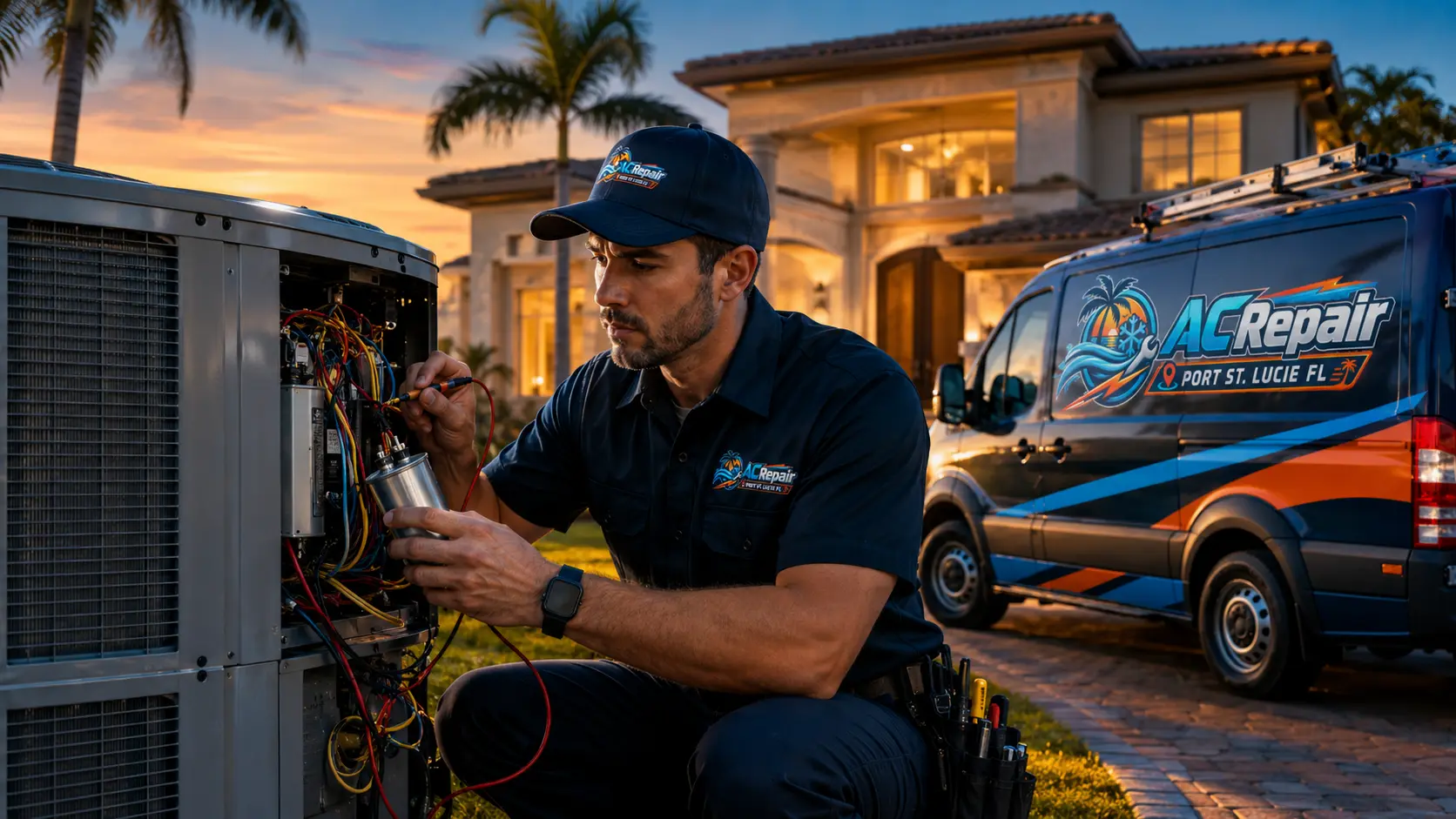
A run capacitor that has drifted below its rated value can leave a compressor unable to start, producing exactly the hum-and-stop pattern people associate with a seized unit. A pitted or welded contactor can interrupt or fail to interrupt power correctly. Loose or corroded connections create voltage drop under load.
Beyond the electrical side, a severely dirty condenser coil, a blocked metering device, or an overcharged system can raise head pressure to the point where an internal overload protector shuts the compressor down. The compressor is doing its job in those cases; the conditions around it are wrong.
What a professional compressor diagnosis may examine
A methodical evaluation typically includes verifying supply voltage under load, measuring the run capacitor against its rated microfarad value, inspecting the contactor and wiring for heat damage, and checking amp draw at start and during operation against the data plate values.
Where those tests come back normal, attention turns to the compressor itself: winding resistance between terminals, insulation resistance to ground, and whether the internal overload resets after cooling. Refrigeration measurements taken alongside those tests indicate whether the compressor is actually pumping.
Common causes of genuine compressor failure
Compressors rarely fail in isolation. Prolonged operation with low refrigerant reduces the cooling and oil return the compressor depends on. Repeated freezing of the evaporator coil can return liquid refrigerant to a component designed to compress vapour. Chronic high head pressure from a dirty condenser coil raises operating temperature season after season.
Electrical events matter too. Surges, brownouts, and rapid short-cycling all stress windings and starting components. Many of these are conditions that develop slowly, which is why a technician usually investigates what damaged the compressor before installing another one.
Repair, condenser replacement, or full system replacement
When a compressor has genuinely failed, three paths exist. Replacing the compressor alone can make sense on newer equipment, particularly where a manufacturer parts warranty is still active. Replacing the outdoor unit provides new components across the whole condensing section. Replacing indoor and outdoor equipment together restores a matched system with current efficiency and refrigerant.
Age, refrigerant type, warranty status, the condition of the indoor coil, and the labor involved all influence which path is reasonable. Mismatched indoor and outdoor equipment can also underperform, which is why a condenser-only swap on an older system deserves scrutiny rather than assumption.
Related components worth checking at the same time
Because capacitors, contactors, and fan motors share the same electrical environment as the compressor, they are often evaluated during the same visit. A weak capacitor left in place after a compressor replacement puts the new component under the same stress that contributed to the original failure.
What you can safely check yourself
✓Note whether the hum lasts a few seconds or continues indefinitely
✓Note whether the outdoor fan spins while the compressor does not
✓Listen for a click from the contactor when cooling is called for
✓Check whether the breaker trips instantly or after a delay
✓Record the equipment model and serial number from the data plate
Leave these to a qualified technician
✕Opening the electrical compartment to inspect the capacitor or contactor
✕Resetting a breaker repeatedly after a compressor-related trip
✕Adding refrigerant to improve a suspected compressor problem
✕Running the system while it short-cycles on an internal overload
Does a humming outdoor unit always mean the compressor is bad?
No. A hum with no start is one of the classic signatures of a failed run capacitor or a starting problem, which is why capacitance and current measurements come before any conclusion about the compressor.
How long should a compressor last in Florida?
Service life varies widely with runtime, maintenance, refrigerant charge history, and electrical conditions. Long cooling seasons mean more operating hours per calendar year here than in cooler climates, which is one reason coil cleanliness and correct charge matter so much.
Is replacing just the compressor a reasonable repair?
It can be, especially on newer equipment or where a parts warranty applies. On older systems the labor and refrigerant involved often make replacement of the condensing unit or full system worth comparing directly.
Can a surge protector help protect the compressor?
Surge protection addresses one specific risk — voltage transients from lightning and grid events. It does not protect against wear, low charge, or airflow problems, so it is a supplement to maintenance rather than a substitute.
Why check the capacitor if the compressor is already suspected?
Because the capacitor is inexpensive, fails frequently in high heat, and produces overlapping symptoms. Eliminating it first avoids replacing a major component unnecessarily.
Need help with compressor repair in Port St. Lucie?
Call 772-946-1295 to describe what your system is doing, or send a service request and we will follow up to arrange a visit.