
How often should I change my filter here?
It depends on filter type, occupancy, pets, and how much dust the home takes in. Checking monthly and replacing when visibly loaded is more reliable than following a fixed interval.
Port St. Lucie, FL
Gatlin Boulevard is a major east–west corridor across the western side of Port St. Lucie, connecting the interstate area with the older core of the city and passing a mix of newer subdivisions and long-established residential streets.
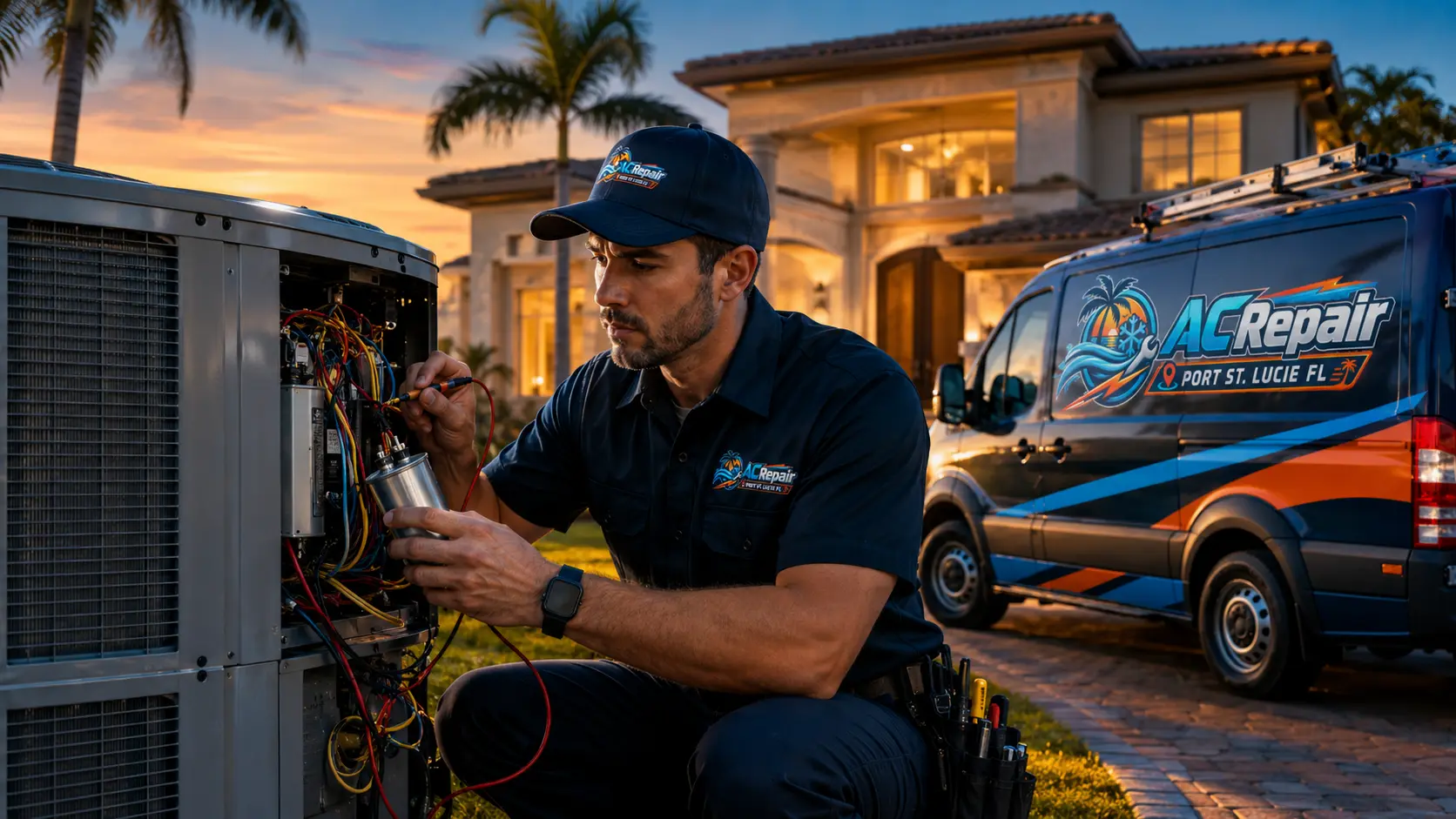
The corridor's variety is what makes it distinctive from a service standpoint. Within a short distance you find homes built in the last fifteen years alongside properties that have been there far longer, which means equipment ages, refrigerant types, and duct designs vary widely.
Much of this area is open and inland, with limited mature canopy in the newer sections. Outdoor units generally take full sun, and the electrical components inside those cabinets carry the operating temperatures that come with it.
Newer homes along the corridor typically have heat pump systems, tighter envelopes, and ductwork installed to more recent standards. Failures there tend to be component-level: capacitors, contactors, control boards, condensate switches, and thermostat configuration.
Older properties in the same area more often present distribution problems — duct leakage, restricted returns, and equipment that has been replaced without the rest of the system being reassessed. The same symptom can therefore have quite different roots depending on the property.
Homes along the Gatlin Boulevard corridor can encounter issues across both newer and older cooling-system configurations.
Areas near active construction and busy roadways put more airborne dust into the environment, and condenser coils act as filters for it. A fin pack loaded with fine dust reduces heat rejection just as effectively as one full of leaves, though it is less obvious to look at.
Indoor filtration matters for the same reason. A filter that is adequate in a quiet inland neighborhood may load faster along a busy corridor, and stretching replacement intervals in that setting is a common contributor to airflow complaints.
Because the housing along this corridor varies so much, the age of the home and equipment is one of the most useful details you can provide when describing a problem.
Capacitor failure symptoms, why heat shortens their life, and important safety notes.
When the control side is the problem, and what a thermostat diagnosis examines.
How residential cooling systems fail, what a diagnosis examines, and how to request service.
See every neighborhood on the service areas page, or read the general AC repair overview.
It depends on filter type, occupancy, pets, and how much dust the home takes in. Checking monthly and replacing when visibly loaded is more reliable than following a fixed interval.
Fine dust settles into condenser fins and indoor coils, reducing heat transfer and airflow. It is a gradual effect, which is why it often shows up as declining performance rather than a sudden failure.
Airflow and static pressure across the equipment, duct condition, and correct charge. New equipment installed on an existing distribution system does not always deliver its rated performance without those being verified.
Call 772-946-1295 to describe what your system is doing, or send a service request and we will follow up to arrange a visit.